Economic growth strategies often begin with the visible instruments of development: foreign direct investment (FDI), international trade, infrastructure, skills, incentives and access to capital.
But more often than not, sustainable economic development and growth begin somewhere less visible: leadership.
Governments do not deliver economic growth simply by possessing the right strategy. They need institutional leadership, governance structures, and organisational culture capable of turning strategy into execution – and that matters, including across the UK-Caribbean economic corridor.
The Caribbean is home to ambitious governments, sophisticated financial services and world-class tourism sectors, significant international relationships, and considerable opportunities for international trade and foreign direct investment.
The United Kingdom, meanwhile, remains connected to the region through longstanding institutional, commercial, and cultural ties.
The opportunity is therefore greater than simply increasing bilateral trade or attracting another round of foreign investment across these jurisdictions. The opportunity lies in better connecting cross-border leadership, institutional capability, and economic development as parts of the same cross-border growth ecosystem.
Growth ↔ Governance ↔ Culture
Growth asks where an organisation or economy is going, how value is created, and what must change to achieve the desired outcome.
Governance determines how decisions are made, how competing priorities are resolved, how accountability operates, and whether strategy can actually be translated into execution.
Culture determines how people behave within those systems: how leaders lead, how teams collaborate, how institutions respond to change, and whether organisational behaviour supports or frustrates strategic objectives.
Weakness in any one eventually constrains the others. A government can have an excellent economic strategy, but struggle to execute it because institutional responsibilities are fragmented. It can possess strong governance structures, but lack the leadership culture necessary to make timely decisions. And organisations can have highly capable individual leaders operating within systems that make delivery unnecessarily difficult. Sustainable growth therefore requires us to look at the whole ecosystem.
From Institutional Performance to Economic Performance
Institutional and economic performance are where leadership development and economic development begin to converge. If a government wants to attract greater FDI, increase exports, support domestic businesses into international markets, or develop new economic sectors, those ambitions create leadership and governance questions.
Who owns the strategy? How are investment opportunities evaluated? How quickly can governments respond to investors? How effectively do ministries, investment promotion agencies, and private-sector organisations work together? Can political objectives be translated into commercially credible propositions? And, critically, does the institutional culture encourage execution?
These are not separate from trade and investment strategy. They determine whether that strategy succeeds.
Championing The UK-Caribbean Economic Corridor
There is an opportunity to approach the UK-Caribbean relationship more strategically. Rather than viewing executive leadership, institutional strengthening, international trade, and FDI attraction as separate programmes, governments, organisations, and businesses would be better served by connecting institutions across the corridor around specific economic outcomes.
Leadership development can strengthen the people responsible for execution. Governance advisory can improve the systems through which decisions are made. Trade programmes can connect domestic businesses with credible international opportunities. FDI strategy can identify and pursue investors aligned with national economic priorities. And bilateral commercial networks can create the relationships through which those opportunities actually move.
The result is a reinforcing cycle: Leadership → Governance → Economic Strategy → Trade & FDI → Private-Sector Growth → Jobs & Investment → Sustainable Growth
ABOUT THE AUTHOR
London Leadership Review™ are an independent leadership intelligence consultancy focused on power, performance, and governance in London and around the world. At LLR we deliver Executive Leadership Consultancy and Coaching to businesses and governments, map the leaders who shape the capital, and publish the LLR Global Leadership Power Index™.
At LLR, in partnership with London Business Network, we believe growth, governance, and culture need not be competing propositions. We believe they are complementary dimensions of organisational performance.
Our Principals, Wilford Augustusand Lori Ann Powell, bring decades of international, commercial, and UK elected office experience to the fore, delivering world-class executive leadership and performance consultancy and coaching for senior leaders in both business and government worldwide.
REQUEST A PRIVATE CONVERSATION
If you’re a mid-market business (£3M–£100M) or government body in need of strategic leadership, growth and governance support across international expansion, bilateral trade & FDI, or Digital, AI & cyber governance, please request a private conversation.
Derisk Boardroom Decisions By Asking Four Simple Questions
London Business Network ·
The Boardroom Decision-Making Framework By Wilford Augustus
McKinsey MECE Test → Granny Test → Storytelling Test → Litmus Test
The Intellectual Foundation
The Boardroom Decision-Making Framework is grounded in propaedeutics and hermeneutics, two longstanding disciplines that date back to ancient Greece, which I learnt during my theological training, where my earliest intellectual discipline was forged.
We were taught something foundational, a simple but uncompromising principle: a text without context becomes pretext.
Interpretation did not begin with feeling, opinion, or outrage. It began with propaedeutics, the preparation required before interpretation could even begin. Who wrote this? When? For whom? Under what conditions?
What assumptions were taken for granted? What problem was being addressed, and which ones were not? Only after this work was done did hermeneutics follow, the act of interpretation itself. Meaning was never assumed. It was earned.
Propaedeutics concerns preparation. Before attempting to reach a conclusion, one must first acquire the foundational knowledge, context, and intellectual readiness necessary to examine the subject properly.
Hermeneutics concerns interpretation. Once sufficient context has been established, the task becomes one of understanding what the available information means, how its constituent parts relate to one another, and how it should be interpreted within its proper context.
Together, these disciplines establish a natural sequence for disciplined decision-making: Preparation precedes interpretation. Interpretation precedes judgement. Judgement precedes action.
Reverse that order, and the quality of the decision begins to deteriorate. Act before understanding, and action becomes premature. Judge without sufficient context, and judgement becomes assumption. Interpret without adequate preparation, and a text without context becomes pretext.
The Boardroom Decision-Making Framework translates these intellectual principles into a practical four-stage sequence for leadership, business, and boardroom decision-making.
Each test performs a distinct function. The first examines the structural integrity of the analysis. The second tests whether the subject has been properly understood. The third determines whether that understanding is sufficiently coherent to survive retelling from one person to another. The fourth brings the decision back to its strategic purpose. The result is a disciplined progression from structure, to understanding, to coherence, to strategic alignment.
1) The McKinsey MECE Test
Are there overlaps or omissions?
The McKinsey MECE Test confirms the structural integrity of the analysis.
It asks whether the constituent parts of a problem, argument, or proposed decision are mutually exclusive and collectively exhaustive: sufficiently distinct to prevent unnecessary duplication, yet sufficiently comprehensive to ensure that no material consideration has been omitted.
Its purpose is to determine whether the whole problem has been examined properly before attempting to interpret it. This is the preparatory stage of the framework. Have I prepared the problem properly?
2) The Granny Test
Could someone entirely outside the subject understand it?
The Granny Test confirms clarity of understanding.
It asks whether a complex argument, problem, or proposed decision can be explained in plain language to an intelligent person with no specialist knowledge of the subject. Can your grandmother understand it?
Its purpose is not to simplify the thinking, but to establish whether the person presenting it genuinely understands what they are seeking to explain.
Complexity can sometimes conceal incomplete understanding. The discipline of translating complexity into clarity forces the leader to determine what something actually means. This is the interpretative stage of the framework. Do I understand what it means?
3) The Storytelling Test
Can it be retold accurately?
The Storytelling Test confirms coherence and retellability.
It asks whether another person, having understood the argument or decision, can retell its essential reasoning accurately without materially distorting its meaning. The goal is not verbatim retelling, but the retelling of the core ideas and principles.
Its purpose is to determine whether the thinking possesses a sufficiently clear internal logic to survive retelling from one person to another.
Understanding something personally is not enough in leadership. Decisions must travel through boards, executive teams, organisations, partners, and stakeholders. A decision that cannot be communicated consistently risks fragmentation during execution.
The Storytelling Test therefore forms the bridge between individual interpretation and collective judgement. Is my interpretation coherent enough to survive retelling?
4) The Litmus Test
Does this help or hurt your strategic objectives?
The Litmus Test forces strategic alignment.
After the problem has been examined structurally, understood clearly, and expressed coherently, the final question is deliberately binary: does the proposed decision advance the strategic objectives, or does it impede them? If the board’s strategic objective is to gain 15% market share over 12 months, then the question is asked: does the given decision help or hurt that objective?
Its purpose is to prevent complexity, emotion, politics, intellectual fascination, or unnecessary optimisation from obscuring the reason the decision is being considered in the first place.
Not every good idea serves the objective. Not every interesting opportunity deserves pursuit. Not every problem requires action. Not every long-standing relationship should be preserved. Just because something has been done in a certain way for many years does not mean it should be perpetuated.
Using this binary framework removes ambiguity, breaks boardroom impasses, eliminates political gridlock, and forces analytical rigour and pragmatic execution across board, revenue, digital, and international market decisions.
The Litmus Test returns the leader to purpose. This is the final test of judgement before action. Having understood it, what judgement serves the strategic objective?
From Preparation to Action
The four tests are designed to operate sequentially:
McKinsey MECE Test – Have I prepared the problem properly?
Granny Test – Do I understand what it means?
Storytelling Test – Is my interpretation coherent enough to survive retelling?
Litmus Test – Having understood it, what judgement serves the strategic objective?
Together, they provide a practical decision-making discipline built upon a simple intellectual foundation: Propaedeutics → Hermeneutics → Judgement → Action, or, in plain English: Preparation precedes interpretation. Interpretation precedes judgement. Judgement precedes action.
Director | Former Mayor | Boardroom Growth & Governance Adviser to Business & Governments on: Digital, AI & Cyber • International Expansion • Bilateral Trade & FDI • UK⇄Europe⇄Americas
Operating from London, England, and serving a global audience, Wilford Augustus is a trusted Boardroom Growth & Governance Adviser and strategic catalyst for cross-border market access. Driving growth when it matters most, Augustus helps mid-market businesses (£3M–£100M) scale and governments attract bilateral trade and foreign direct investment (FDI) across UK-anchored Global Economic Corridors. Addressing leadership, commercial, technological, and international market access mandates through the singular strategic lens of driving growth, Augustus delivers a singular measurable outcome to clients: Growth.
If You’re a Mid-Market Business (£3M–£100M) or Government Agency in Need of Strategic Growth and Governance Support Across International Expansion, Bilateral Trade & FDI, or Digital, AI & Cyber, Please Request a Private Conversation.
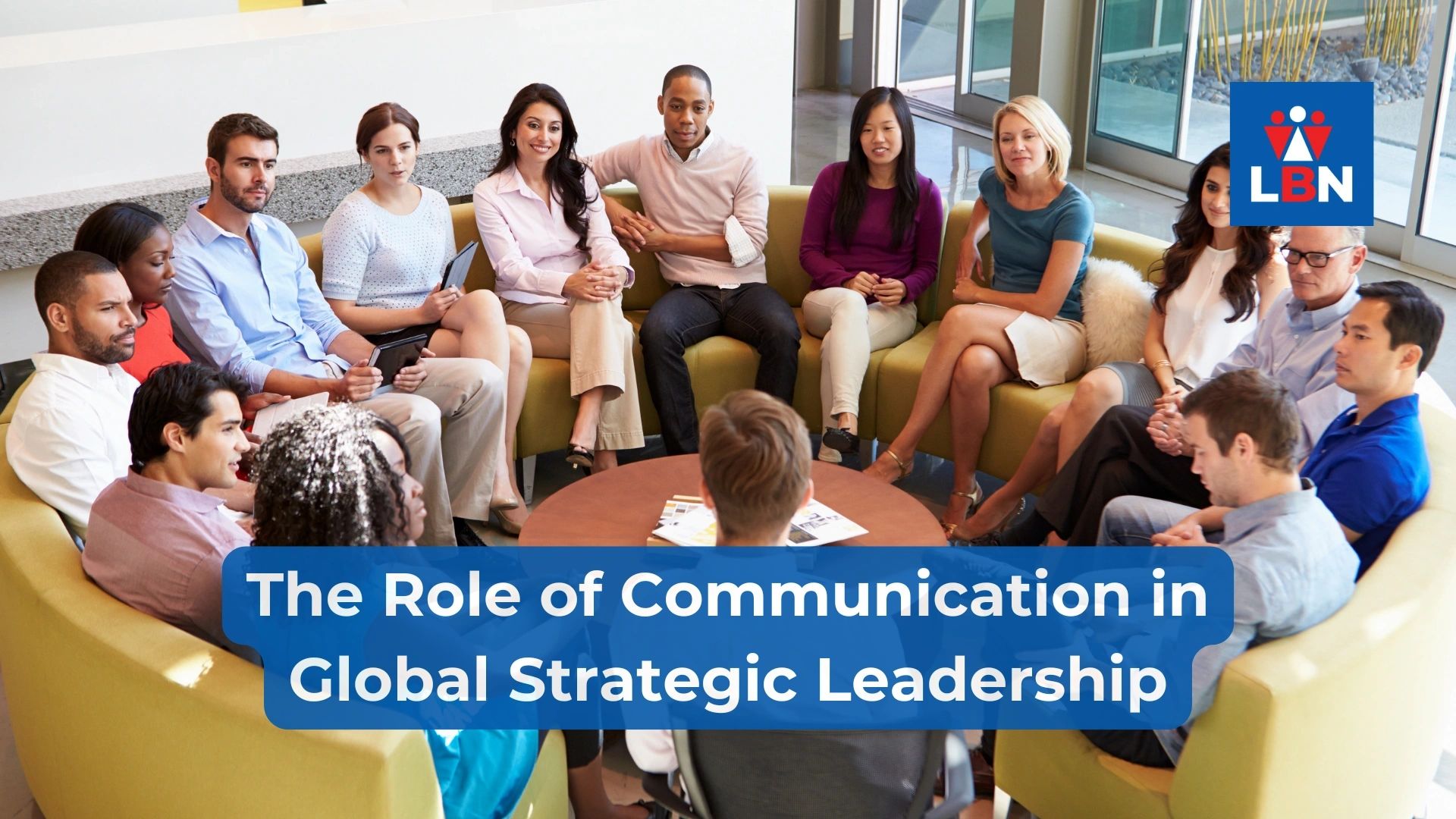
The Role of Communication in Global Strategic Leadership
London Business Network ·
The Role of Communication in Global Strategic Leadership
Global leadership in our interconnected world demands a profound understanding of communication across sectors, cultures, and borders. Furthermore, being a global leader in cities like London, where the world resides, requires shared values to build prosperous communities.
Whilst translators and interpreters have long been relied upon in international relations, their use falls short when cultural nuances are overlooked. Businesses, governments, militaries, and NGOs often fail to assess 'culture' when doing risk assessments, leading to missteps that undermine efforts to build sustainable partnerships.
Effective global leadership begins with recognising that cross-sector, cross-cultural, and cross-border communication requires more than surface-level understanding. For example, leaders navigating international collaborations and mergers and acquisitions must identify areas of shared interest and commonality whilst addressing differences with sensitivity and respect. This is no easy task, as seemingly similar cultures can exhibit significant communication differences.
A Scandinavian professional fluent in English may assume alignment with British counterparts, only to encounter unexpected challenges in communication styles. Global leaders must therefore focus on maximising shared values and fostering mutual respect. The ability to adapt communication strategies and bridge cultural divides is key to achieving success in international business.
The Iceberg Effect: Surface-Level vs Deep Cultural Understanding
The iceberg effect in cross-cultural communication often lulls leaders into a false sense of security. Surface-level commonalities such as shared languages, dress codes, manners, and traditions are readily observable but can be deceptive.
Genuine cultural understanding for global strategic leaders includes understanding there are: differences in worldviews, ethics, values, faith, morality, gender roles, and attitudes toward power and authority. These deeper psychographic factors form the foundation of how individuals and societies interact and make decisions.
Global leaders must navigate these unseen cultural dynamics to foster trust and collaboration. For example, conflict resolution varies widely across cultures. Some societies emphasise dialogue and negotiation, whilst others may prioritise confrontation or retribution as a means of achieving peace. Failing to account for these differences can lead to misunderstandings, strained relationships, and conflict.
Cross-Sector Collaboration In Public-Private Partnerships
Global leadership across sectors adds another layer of complexity to communication. In cross-sector environments, such as public-private partnerships or collaborations between NGOs and governments, differing organisational cultures and priorities can create barriers to effective communication. Leaders must balance these differences by fostering open dialogue, aligning goals, and building shared frameworks for decision-making. This requires a nuanced understanding of both cultural and sector-specific contexts.
Communication as a Strategic Priority
Global leaders must move beyond language barriers to embrace a deeper understanding of cultural nuances to achieve their strategic organisational goals. By prioritising cultural intelligence and fostering meaningful connections, leaders can build trust, drive collaboration, and ensure long-term success in an increasingly intricate and interconnected world. Ultimately, effective communication is not just a skill but a cornerstone of responsible global strategic leadership. Leaders must invest in developing cultural intelligence and fostering environments where diverse perspectives are valued. This includes:
Training: Providing cultural intelligence training for teams to improve understanding and collaboration.
Engagement: Encouraging inclusive dialogue that respects diverse viewpoints and experiences.
Adaptation: Tailoring communication styles to suit different cultural and sectoral contexts.
About the Author
Wilford Augustus
Founder, London Business Network
Wilford Augustus is a Global Growth Strategist and trusted adviser helping businesses scale and governments attract investment in the UK and global markets. A principled Founder, Civic Leader, and Former Mayor in England, he brings a rare blend of public-sector insight and private-sector execution. Over a decades-long career spanning the UK, the Nordics, Latin America, and the Caribbean, Wilford has supported SMEs, high-growth ventures, and multinationals — including EY, Kimberly-Clark, and the United Nations — alongside local authorities, government bodies, and FDI agencies.
Why Networks Still Matter More Than Capital in Global Expansion
London Business Network ·
The real constraint in global growth is not just funding
For many founders and executives considering international expansion, capital appears to be the primary bottleneck. Fundraising dominates the conversation. Pitch decks are refined. Valuations are debated. Yet in practice, capital is rarely the decisive constraint.
The businesses that struggle to expand globally do not fail because they lacked money. They fail because they lacked access — to trusted relationships, credible introductions, and the informal decision-making environments where markets actually open.
In global expansion, capital accelerates outcomes, but networks determine direction.
The misconception: capital creates opportunity
The prevailing assumption is simple: raise enough capital and the rest will follow. Offices can be opened. Teams can be hired. Advisors can be retained.
This logic works in transactional markets with clear rules and predictable pathways. It breaks down in relational markets, particularly in cities like London, where trust, reputation, and prior association shape access long before contracts are discussed.
Money may buy services.
It does not buy legitimacy.
And without legitimacy, access remains superficial.
How expansion really works in practice
When businesses expand across borders, especially into mature markets, three realities assert themselves quickly:
1. Gatekeepers matter
Key opportunities are rarely publicly advertised. Introductions determine which conversations happen at all.
2. Trust precedes transaction
Decision-makers assess who is making the introduction before what is being proposed.
3. Reputation compounds quietly
Association with the right people and environments accelerates credibility faster than marketing ever can.
In this context, networks are not social conveniences. They are operational infrastructure.
London as a relational market
London exemplifies this dynamic.
It is not simply a financial centre. It is a convergence point for capital, policy, talent, and international business leadership. Many of the most consequential decisions occur informally, in private rooms, closed forums, and curated settings where participants are already pre-vetted.
For outsiders, this can be misread as opacity or elitism. In reality, it is a function of risk management. High-stakes environments rely on trusted pathways to reduce uncertainty.
Businesses that understand this integrate into the right networks early. Those that do not often spend years mistaking activity for progress.
Why capital alone underperforms
Capital performs best when paired with:
Contextual knowledge
Local credibility
Trusted intermediaries
Decision-grade introductions
Without these, expansion efforts tend to suffer from predictable failure modes:
Endless exploratory meetings
Slow decision cycles
High advisory costs with low commercial traction
Difficulty converting interest into commitment
None of these issues are solved by additional funding. They are solved by being in the right rooms, with the right people, at the right time.
Strategic implications for leaders
For leaders considering global expansion, the implication is clear:
Capital should follow access, not precede it
Networks should be chosen deliberately, not opportunistically
Membership should signal seriousness, not sociability
This requires a shift in mindset.
Networking is often dismissed as informal or secondary. In reality, it is one of the most strategic investments a leadership team can make, provided it is structured, curated, and aligned with clear commercial objectives.
A different way to think about networks
The most effective business networks operate less like events and more like institutions.
Over time, this becomes an advantage that competitors cannot easily replicate — regardless of how much capital they raise.
Closing perspective
Global expansion is not a race to deploy resources. It is a process of earning access.
Capital remains important. It always will. But in practice, networks determine which opportunities capital is even allowed to pursue. Leaders who understand this expand with fewer surprises, lower friction, and greater strategic control. Those who do not often discover — too late — that money travels faster than trust.
About the Author
Wilford Augustus is a Global Growth Strategist and trusted adviser helping businesses scale and governments attract investment in the UK and global markets. A Founder, Civic Leader, and Former Mayor in England, he brings a rare blend of private-sector execution, public-sector insight, and board-level leadership to every engagement. His work spans the UK, the Nordics, Latin America, and the Caribbean, supporting SMEs, high-growth ventures, and multinationals — including EY, Kimberly-Clark, and the United Nations — alongside government bodies, local authorities, and foreign direct investment agencies.
For organisations seeking strategic guidance and speaking engagements on growth or market access, meetings can be scheduled here.
UK–China Rapprochement: Pragmatism in an Era of US Uncertainty
London Business Network ·
UK–China Rapprochement: Pragmatism in an Era of US Uncertainty
The recent approval of China’s new mega-embassy in London, set to become Beijing’s largest diplomatic presence in Europe, is not an isolated planning decision.
Taken together with shifting dynamics in Washington and a more assertive US posture, it signals something deeper: Britain is quietly rebalancing its global posture.
The embassy decision is a signal, not a concession.
Approving a major Chinese diplomatic footprint in London has inevitably drawn criticism, particularly in the context of espionage risks, national security, and alignment with allies. But diplomacy is not endorsement. It is statecraft. This is not ideological drift. It is strategic pragmatism.
London remains a global city precisely because it continues to host the world, including competitors, rivals, and uncomfortable partners. Closing doors rarely strengthens leverage. Keeping them open, on British terms, often does.
The embassy approval reflects a long-standing British instinct: engage structurally, manage risks institutionally, and avoid performative rupture.
The return of structured UK–China engagement
More telling than bricks and mortar is the revival of formal economic dialogue. The re-energising of the UK–China CEO Council marks a return to structured, elite-level engagement, pragmatically focused on trade, investment, and long-term economic interests.
This matters because Britain’s China policy is not being outsourced to slogans or soundbites. It is being handled through institutions, process, and quiet negotiation, which are the hallmarks of a serious trading nation.
In short, this is British and Chinese pragmatism meeting where interests overlap, without illusions, and without theatrics.
These are, indeed, very interesting times.
About the Author
Wilford Augustus is a Global Growth Strategist and trusted international adviser helping businesses scale and governments attract investment in the UK and global markets. A Founder, Civic Leader, and Former Mayor in England, he brings a rare blend of private-sector execution, public-sector insight, and board-level leadership to every engagement.
Wilford's in-country experience spans the United Kingdom, the Nordics, and the Americas, giving him grounded regional insight, international cultural fluency, and applied cross-border judgement, which he brings to every assignment.
Over a decades-long career, Wilford has supported startups, SMEs, high-growth ventures, and multinationals, including EY, Kimberly-Clark, and the United Nations, as well as government bodies, local authorities, and foreign direct investment (FDI) agencies.
For organisations seeking strategic guidance and speaking engagements on leadership, market access, and growth, please schedule a free online discovery meeting via London Business Network today. [Click here]
Why Governance Matters More Than Strategy During Growth
London Business Network ·
Strategy rarely fails on paper
Most growth strategies are coherent. Markets are analysed. Opportunities are identified. Plans are approved.
Yet many organisations that appear strategically sound still stumble as they scale.
The failure is not usually intellectual.
It is structural.
As businesses grow, the limiting factor shifts. Strategy remains important, but governance — how decisions are made, tested, challenged, and executed — becomes decisive.
The misconception: better strategy solves growth problems
When growth stalls or complexity increases, the instinctive response is often to revisit strategy:
• Refine the vision
• Adjust the market focus
• Commission another strategic review
This can be useful. But in scaling organisations, strategy is rarely the root problem.
More often, the issue lies in decision quality:
• Who decides
• On what basis
• With what accountability
• And at what cadence
Without robust governance, even strong strategies degrade in execution.
What governance actually means in practice
Governance is frequently misunderstood as compliance, process, or control.
In reality, effective governance is about decision discipline.
It ensures that:
• Authority is clearly defined
• Risk is understood, not avoided
• Trade-offs are surfaced early
• Accountability is explicit
Good governance does not slow organisations down.
It prevents them from accelerating in the wrong direction.
Why governance becomes critical during growth
As organisations scale, three pressures intensify:
1. Decision velocity increases
More choices, made faster, with greater consequence.
2. Information becomes asymmetric
Leaders no longer see everything directly. They rely on systems and people.
3. Risk multiplies quietly
Small errors compound. Weak assumptions travel further.
In this environment, informal decision-making — effective in early stages — becomes a liability.
Governance provides the structure needed to maintain clarity under pressure.
Founder intuition vs institutional resilience
Many high-growth organisations are built on strong founder intuition. This is often their greatest early advantage.
Over time, however, intuition must be complemented by governance if the organisation is to endure.
This does not mean sidelining founders.
It means supporting them with structure.
Boards, non-executive perspectives, and formal decision frameworks exist not to constrain ambition, but to protect it from distortion as complexity increases.
Common governance failure modes
Across sectors, similar patterns emerge when governance lags growth:
• Strategic decisions made without challenge
• Operational issues escalated too late
• Accountability diffused across teams
• Risk framed emotionally rather than analytically
These issues are rarely dramatic at first. They become visible only when correction is expensive.
Governance as a growth enabler
Well-designed governance systems do three things particularly well:
• They surface reality early
Bad news travels faster, not slower.
• They improve decision quality
Choices are informed by evidence rather than instinct alone.
• They preserve leadership authority
Leaders retain credibility because decisions are consistent and explainable.
In this sense, governance is not a constraint on strategy.
It is what allows strategy to function at scale.
Implications for leadership teams and boards
As organisations grow, leadership must evolve from direction-setting to decision stewardship.
This requires:
• Clear governance architecture
• Defined roles between executives and boards
• Willingness to invite challenge without losing authority
Organisations that do this well navigate growth with fewer surprises and greater resilience.
Those that do not often discover that strategic brilliance cannot compensate for structural weakness.
Closing perspective
Strategy determines where an organisation wants to go.
Governance determines whether it arrives intact.
In periods of growth, governance is not secondary to strategy.
It is what allows strategy to survive contact with reality.
Leaders who recognise this early build organisations that scale with discipline, credibility, and control.
About the Author
Wilford Augustus is a Global Growth Strategist and trusted adviser helping businesses scale and governments attract investment in the UK and global markets. A Founder, Civic Leader, and Former Mayor in England, he brings a rare blend of private-sector execution, public-sector insight, and board-level leadership to every engagement. His work spans the UK, the Nordics, Latin America, and the Caribbean, supporting SMEs, high-growth ventures, and multinationals — including EY, Kimberly-Clark, and the United Nations — alongside government bodies, local authorities, and foreign direct investment agencies.
For organisations seeking strategic guidance and speaking engagements on growth or market access, meetings can be scheduled here.